Where dust is a problem — live sites, occupied buildings, delicate substrates — wet blasting (vapour blasting) gives the cleaning power of abrasive blasting with the dust almost entirely suppressed. Goliath Coatings provides wet blasting across Auckland for surface preparation, restoration and cleaning where a dry blast is not practical.
How wet blasting suppresses dust
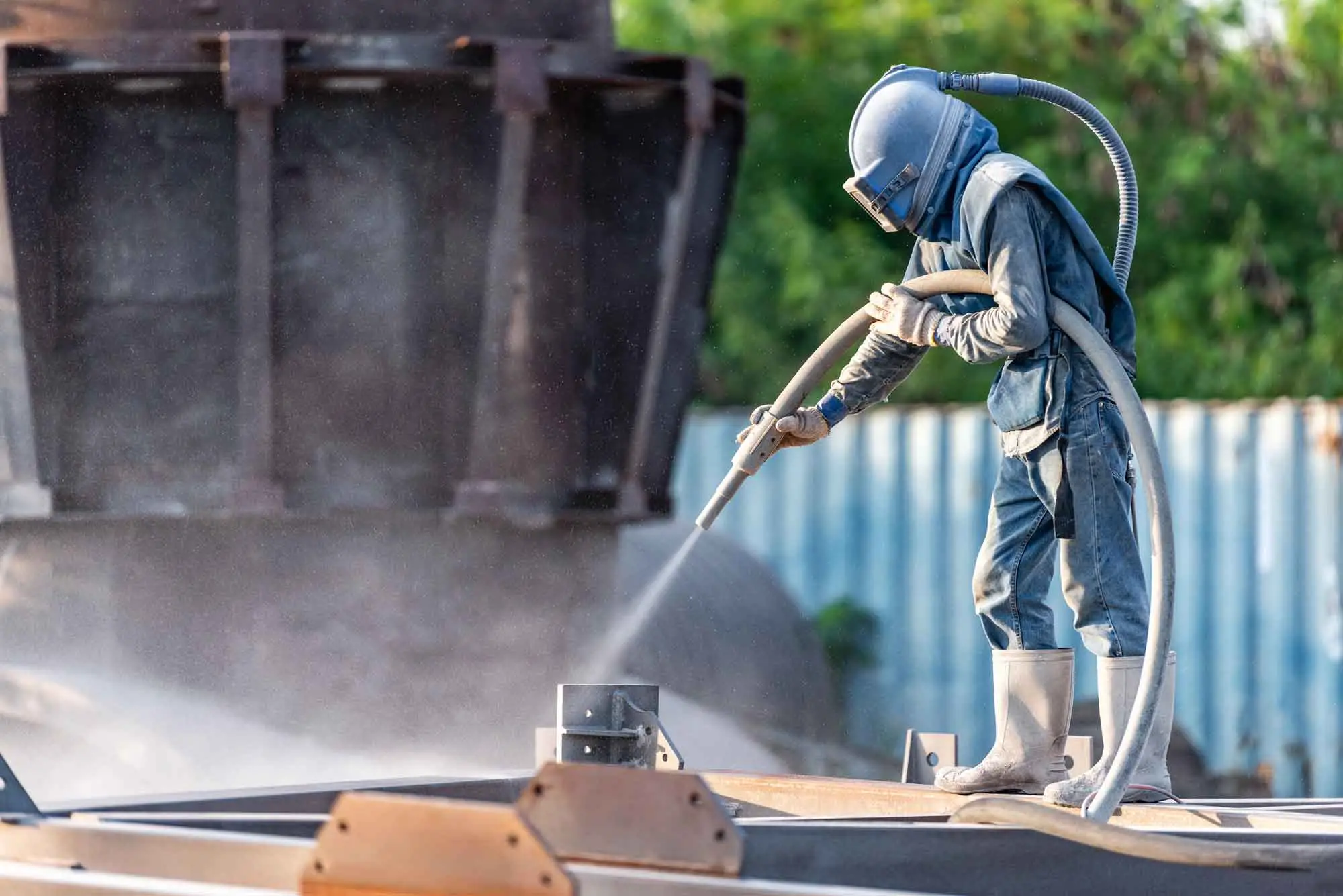
Wet blasting introduces water into the abrasive stream, which traps airborne dust at the nozzle and knocks down the silica hazard that makes dry blasting unsuitable around people. The water also cushions the abrasive slightly, so the process cleans effectively while being gentler on softer substrates — a real advantage on heritage masonry, render and detailed surfaces.
Where wet blasting wins
We use wet blasting on occupied or sensitive sites where dust control is essential, on softer or detailed substrates that a dry blast could damage, and for general cleaning and coating removal where flash-rust can be managed. It produces less dust cloud, better visibility for the operator and a cleaner work area than equivalent dry blasting.
Prepared correctly for coating
As with any blast prep, the goal is a clean surface with the right profile for the next coating. We set the abrasive, pressure and water to suit the substrate, then manage flash-rust on steel with an inhibitor or prompt coating so the prepared surface is ready to take its protective system.
What wet blasting achieves
Wet (vapour) blasting injects water into the abrasive stream, so it cuts a comparable anchor profile to dry blasting while suppressing airborne dust by up to around 90%. That makes it the right choice on occupied and commercial sites, near machinery, or on more delicate substrates where flying dust and grit aren’t acceptable. The water also binds the spent media and flushes salts and contaminants off the surface as it works, leaving a cleaner profile to coat over.
Why choose Goliath Coatings
Low-dust surface preparation is a specialty. Wet blasting binds the dust at the nozzle so we can clean and profile in occupied or dust-sensitive sites without the airborne mess of dry blasting. Free on-site assessment, one-business-day response, and 5-star Auckland reviews.
Wet blasting FAQs
Q: How is wet blasting different from sandblasting?
A: Water is added to the abrasive stream, which suppresses dust and is gentler on substrates — ideal for occupied sites and delicate surfaces.
Q: Does wet blasting cause rust on steel?
A: It can flash-rust, so we use a rust inhibitor or coat promptly to protect freshly cleaned steel.
Q: Is it suitable near people and equipment?
A: Yes — that is its main advantage; the suppressed dust makes it far better suited to occupied and sensitive sites.
Q: What’s the advantage of wet blasting over dry?
A: It produces almost no airborne dust — up to about 90% less — while still leaving a sound anchor profile, so it suits occupied buildings and sites where dust control matters.
Q: What determines the cost?
A: The surface area, the media required, and what is being removed — coatings, corrosion or contamination. We inspect the surface free of charge and quote a firm price for the finish standard you need.
Q: Is the work guaranteed?
A: Yes — our workmanship is guaranteed and we install proven systems from leading suppliers. Goliath Coatings is fully insured, Tōtika accredited and Site Safe certified.