The movement joints and gaps in a building facade are where weather gets in — and where most exterior leaks begin. Goliath Coatings provides façade joint sealing across Auckland, replacing failed sealant and weatherproofing the joints in precast, cladding and curtain-wall facades to keep buildings watertight.
Why façade joint sealing matters
A facade is not monolithic — it is made of panels and elements that expand, contract and move, with sealed joints between them. When that sealant perishes, cracks or pulls away, water tracks straight through into the structure. Façade joint sealing renews these joints with the correct sealant, restoring the weatherproof line that keeps the building envelope dry.
The right sealant, installed properly
Sealant fails early when it is the wrong grade or poorly installed. We remove the perished sealant, clean and prime the joint, fit the correct backing rod to control depth, and gun in a high-movement sealant rated for the joint width and exposure. Tooled correctly, it bonds to both faces and flexes with the building instead of splitting at the next temperature swing.
Remedial and access work
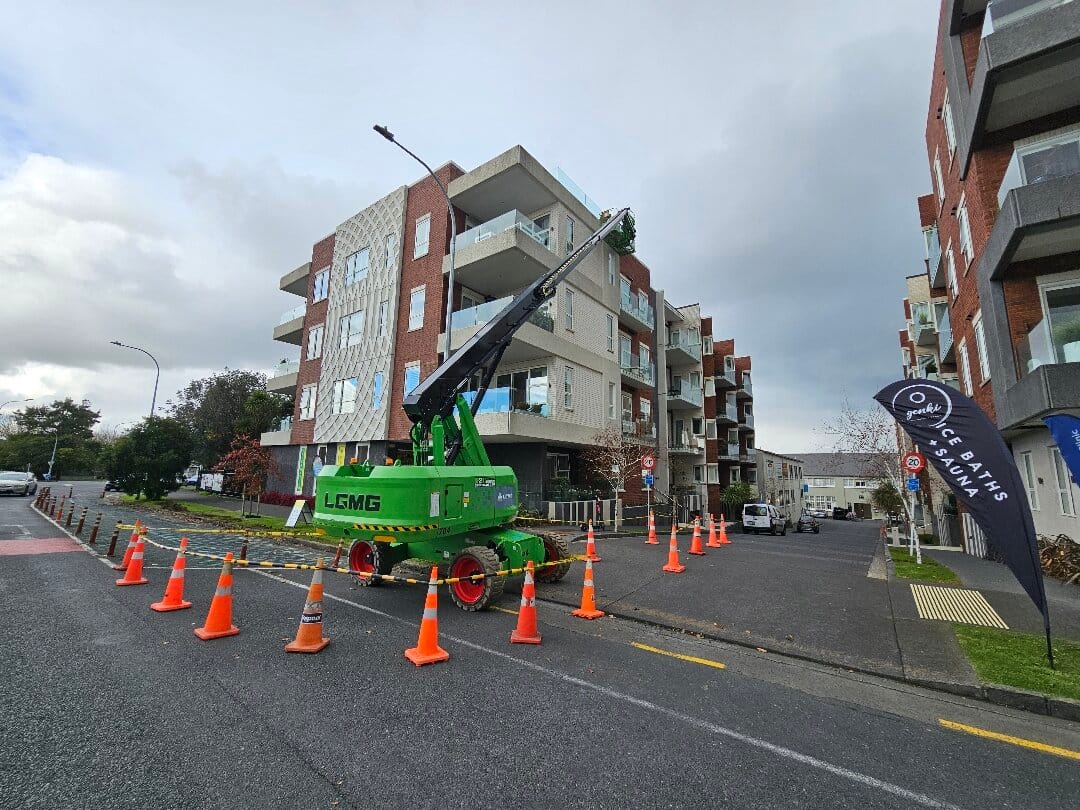
We reseal precast panel joints, cladding and curtain-wall perimeters, window and door interfaces, and expansion joints — working from access equipment or rope access where height demands. We assess the existing joints first, because the failure pattern tells us whether it is a sealant problem or a design issue that needs a different detail.
The products and systems we use
Movement and construction joints are where façades leak first, so the sealant choice matters. We use BRANZ-appraised Bostik Seal ‘N’ Flex Facade low-modulus sealant for tilt, precast and render joints, and Sika Sikaflex-11 FC and tough Sikaflex PRO-3 for wider or trafficked joints. Joints are sized, backed and primed correctly so the sealant can move with the building and stay weathertight for years.
Why choose Goliath Coatings
Façade weatherproofing and remedial sealing are a specialty. Joints are where a façade leaks first, so we cut out the failed sealant, prepare the joint correctly and re-seal with the right movement capability for where it sits on the building. Free on-site assessment, one-business-day response, and 5-star Auckland reviews.
Façade joint sealing FAQs
Q: How often does facade sealant need replacing?
A: Quality sealant lasts many years, but exposure and movement eventually perish it — when you see cracking, gaps or leaks, the joints need resealing.
Q: Can resealing stop my building leaking?
A: Often yes — failed joints are a leading cause of facade leaks. We assess whether it is a sealant failure or a detailing issue and fix accordingly.
Q: Do you do high-level work?
A: Yes — we reseal facades from access equipment or rope access depending on the building and the joints involved.
Q: Why do façade joints keep failing?
A: Usually the wrong sealant or a joint sized incorrectly. We use movement-rated sealants like Bostik Seal ‘N’ Flex Facade or Sikaflex PRO-3, set up with the right width-to-depth and backing rod so they flex instead of splitting.
Q: What determines the cost?
A: Height and access, the amount of substrate repair needed, and the coating system specified. The on-site assessment is free and the quote is itemised so you can see exactly where the cost sits.
Q: Is the work guaranteed?
A: Yes — our workmanship is guaranteed and we install proven systems from leading suppliers. Goliath Coatings is fully insured, Tōtika accredited and Site Safe certified.